
From: OnlineCollegeCourses.com
Yesterday Apple announced the iPad mini. It will perform just as the iPad 3 but it is smaller, 7 inches, which is similar to the kindle fire and other android tablets. So why is this good and bad for Apple?
Its good because now Apple will have a product to compete with the Kindle Fire and Android tablets in the 7 inch range. There were a whole host of people who like that size over the original iPad (myself included so this is a welcome change).
Now what is interesting is that Steve Jobs was against a mini-tablet and I believe this is why:
Apple makes an iPod touch that sells for $199 – the same price as the kindle fire and other android tablets. So if Apple wants to compete with the Kindle, they needed a cheaper device but they could not meet the $199 price point unless they made their iPod cheaper. So what did Apple do? Start the base model of the mini ipad for $329, which is still significantly higher than the kindle. Will people buy this new device? I am sure they will sell millions. Will people who are leaning towards the kindle for the price point buy this? I do not think so. $130 is a lot of people who are struggling with money right now.
Will I be buying this device? Well I already have an iPad so since this does nothing new, I will not be. In the future though, I would prefer this size device to my currect iPad when I replace it. And that is where this device will shine – I think people will replace their current iPads (when they are ready to) with this device. People getting new iPads will get this device, not the larger one. That is where I see the future of this device headed.

Many people are familiar with the Meyers Briggs test. Its the one that tells you if you should be an executive, a doer, a protector, etc. Many companies also use this test. The main question I though is are these tests valid? What do they really tell us and are they useful?
Well let me start with validity. Well here is an excerpt from this article explaining how the test was developed:
“Perhaps the most common misconception about the MBTI is that it shows your aptitude, helping you determine what kinds of things you’d be good at. This is not the case. Myers-Briggs is only about determining your preference, not your ability. There might be things that you’re good at that you don’t enjoy, and there might be things you enjoy that you’re not good at. The MBTI helps your find your comfort zone, the types of activities you’ll like and be most content with; not necessarily those at which you’ll be especially competent.
Even though neither had any background in psychology, Myers and Briggs enjoyed great success with their system. As Mrs. Briggs was getting quite old, Isabel Myers was the main driving force. Her initial idea was that certain personality types would more easily excel at different jobs, and the tool was intended to be used by women entering the workforce during World War II.
So the MBTI’s practical use is overwhelmingly unscientific, and it’s often criticized for this. Criticism ranges from the pragmatic fact that neither Jung nor Myers and Briggs ever employed scientific studies to develop or test these concepts, relying instead on their own observations, anecdotes, and intuitions; all the way to charges that your MBTI score is hardly more meaningful than your zodiac sign.”
Now on validity, here is an image comparing these types of tests which shows the meyers-briggs test is lacking in both construct and predictive validity:
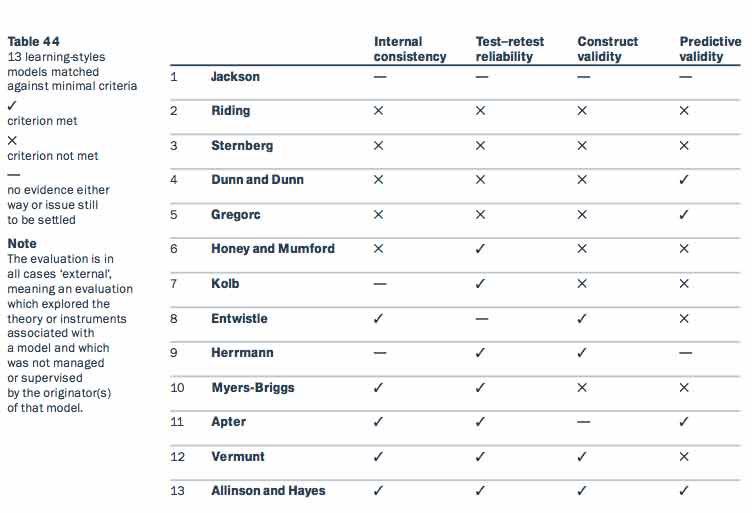
Now What is the danger with this test? Well it is not an accurate test but even if it was here is the main danger: It plays on stereotypes. It is stereotyping.
To take a screenshot on the Mac:
Command+Shift+3: takes a screenshot of the full screen and saves it as a file on the desktop
Command+Shift+4: Allows you to select which part of the screen to capture and then saves it as a file on the desktop
Last week the state of Minnesota banned MOOCs. Why? Apparently they have a law that states that any university trying to operate within their border must meet state standards (as in get approval to operate). This would be OK if Minnesota had some kind of quality program but my guess is that the people in charge are not even educators and that there are companies that stand to lose money if the state pushed to get MOOCs out. Here is an excerpt from the chronicle:
“The state’s Office of Higher Education has informed the popular provider of massive open online courses, or MOOC’s, that Coursera is unwelcome in the state because it never got permission to operate there. It’s unclear how the law could be enforced when the content is freely available on the Web, but Coursera updated its Terms of Service to include the following caution:
Notice for Minnesota Users:
Coursera has been informed by the Minnesota Office of Higher Education that under Minnesota Statutes (136A.61 to 136A.71), a university cannot offer online courses to Minnesota residents unless the university has received authorization from the State of Minnesota to do so. If you are a resident of Minnesota, you agree that either (1) you will not take courses on Coursera, or (2) for each class that you take, the majority of work you do for the class will be done from outside the State of Minnesota.”
Apparently, facing backlash from the higher ed community, Minnesota plans to ignore the law and let these programs exist within its borders – http://chronicle.com/blogs/wiredcampus/facing-backlash-minnesota-decides-to-allow-free-online-courses-after-all/40588
Now there are a lot of good issues here. First, these MOOCs are free and offer no credit….plus they are online. How could a state really police them? Should a state really be able to police what is on the internet? On one hand you have states rights and on the other you have a state telling its citizens what they can and cannot see online which brings up a whole host of issues. I would not be surprised if we see more of these types of situations in the very near future so keep your eyes peeled:)
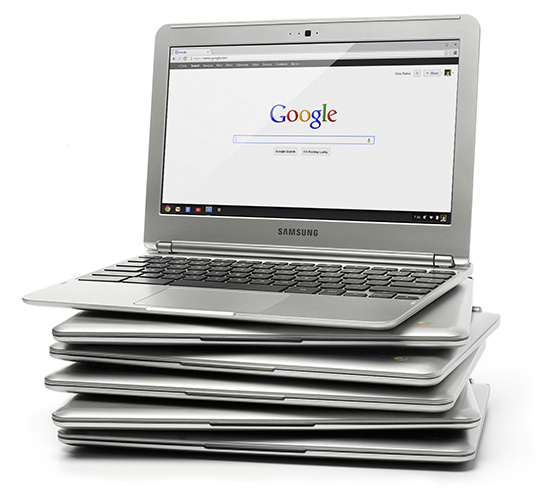
Google has created the $250 laptop. Why do I see these as important? Well when a school is choosing whether to buy tablets (iPad) for $400 vs a laptop which has more functionality for $250, they are going to be getting full computers.
Features of this computer:
Link to website with more info on the computer
One of the goals that we try to teach our students is that they should know about the major software packages. In my program we have them use each software package in addition to learning about them so that they can see the advantages and disadvantages to each. Here is a nice little chart I found with article to accompany it. While it doesnt compare all software (ie flash, articulate stoyline, etc.) it does have many others. You can check out the full article here


